
Oil trades near 7-month low as U.S. waivers ease shortage fears
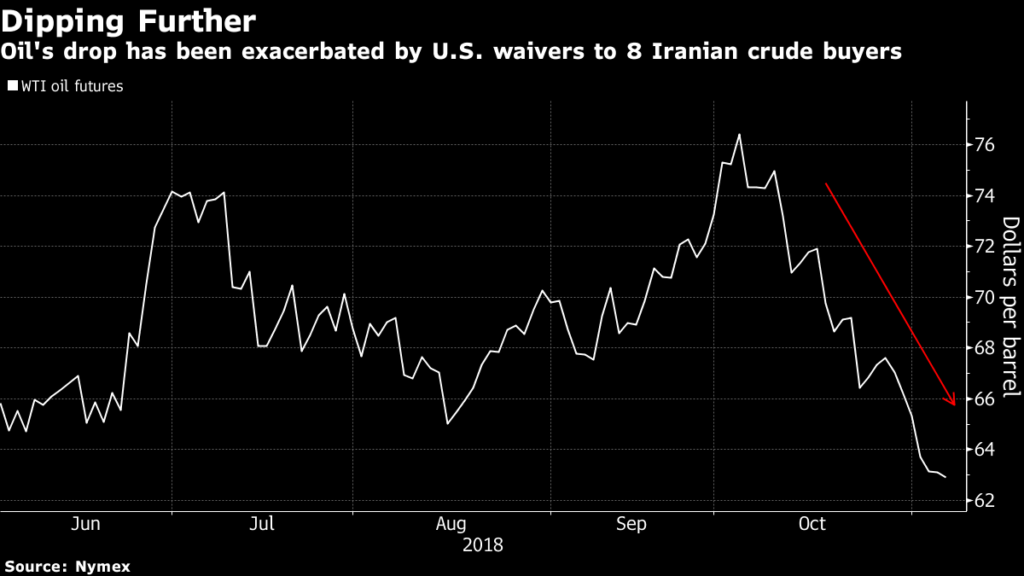
Oil held near the lowest level in seven months as concerns over a supply crunch eased after the U.S. granted waivers to eight governments on purchases of Iranian crude.
Futures in New York slid as much as 0.8 per cent, extending a drop of about 7 per cent in the past six sessions. More details emerged on the amount of Iranian crude some nations can buy under American sanctions, after Secretary of State Michael Pompeo confirmed on Monday that China, India, Italy, Greece, Japan, South Korea, Taiwan and Turkey have been given temporary exemptions from the restrictions. Meanwhile, U.S. crude inventories are forecast to have risen a seventh week.
Crude has fallen more than 17 per cent from a four-year high last month as American crude stockpiles continued to expand and chances grew for the Trump administration to grant waivers, lowering gasoline prices ahead of Tuesday’s U.S. midterm elections. Meanwhile, a trade dispute between Washington and Beijing stoked concerns over slowing global growth that underpins energy consumption.
“The U.S. has for now given a lifeline to Iran,” said Olivier Jakob, managing director at consultants Petromatrix GmbH in Zug, Switzerland. “The end result of the sanctions is softer than expected. The final outcome of the sanctions also confirms the political fear of high gasoline prices.”
West Texas Intermediate crude for December delivery dropped as much as 52 cents to US$62.58 a barrel on the New York Mercantile Exchange, and traded at US$63.19 at 2:05 p.m. in London. Futures settled at $63.10 on Monday, lowest since April 6. Total volume traded was 17 per cent above the 100-day average.
Brent futures for January settlement slid 18 cents, or 0.3 per cent, to US$72.99 a barrel on the London-based ICE Futures Europe exchange. The global benchmark crude traded at a US$9.81 premium to WTI for the same month.
The waivers awarded allow China to purchase up to 360,000 barrels a day for the next six months, India to buy up to 300,000 a day, and South Korea as much as 200,000 a day, according to people familiar with the matter who declined to be identified. Japan’s biggest refiner, JXTG Holdings Inc., said it’s considering resuming Iranian imports after the country also received a waiver.
As criticism increased from some American conservatives who didn’t think Donald Trump should have issued any waivers, the U.S. president defended the move by saying he didn’t want to shock energy markets by forcing all buyers to halt Iranian oil purchases. The exemptions were only temporary measures to ease buyers’ transition and avoid destabilizing the market, Pompeo also reiterated.
Meanwhile, U.S. crude stockpiles probably rose by 2 million barrels last week, according to a Bloomberg survey before the Energy Information Administration releases data Wednesday. That would be the longest streak of increases since March 2017.
Other oil-market news: OPEC must increase production to meet robust global demand growth as output continues to decline in Venezuela and U.S. sanctions on Iran restrict exports, IEA Executive Director Fatih Birol said. Iraq will continue to have access to the energy it needs from Iran to generate and supply electricity, said Brian Hook, special representative for Iran at the U.S. State Department.
Source: BNN Bloomberg
https://www.bnnbloomberg.ca/oil-trades-near-7-month-low-as-u-s-waivers-ease-shortage-fears-1.1163663
